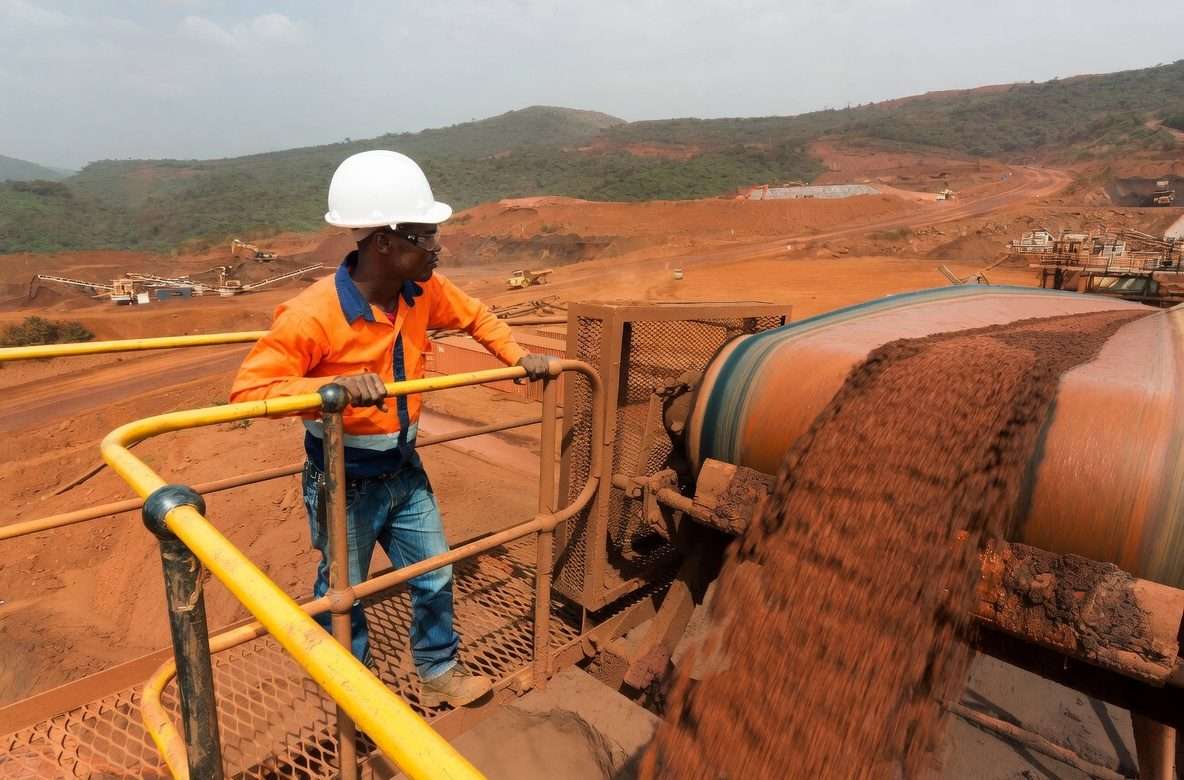
Ferrous

Across the ferrous value chain—from iron ore mining to sintering, pelletising, and ferroalloy production—feed chemistry consistency is critical to operational performance and profitability.
Real-time online elemental analysers provide continuous measurement of key elements directly on conveyor belts, enabling immediate, data-driven control of ore classification, blending, and process feed preparation.

Key Operational Benefits

1. Accurate Ore Classification & Feed Control

Real-time measurement of Fe, SiO₂, Al₂O₃, CaO, MgO, Mn, and P allows.
Client Value:
Improved feed consistency into downstream processes and reduced variability-related losses.
Example Use Case:
High-grade iron ore is separated from lower-grade material in real time, ensuring only compliant feed reaches the blast furnace or export stream.

2. Optimised Blending for Process Stability

Consistent chemistry is essential for stable metallurgical performance.
Real-time data allows:
Client Value:
Reduced process variability, improved throughput, and consistent product quality.
Example Use Case:
Scanmin FNDAA measures Organic and in Organic elements directly, allowing simultaneous measurement of flux, reductant and concentrate
Sinter plant blending is dynamically adjusted to maintain target basicity, improving sinter strength and permeability.

3. Improved Energy Efficiency & Cost Reduction

Feed composition directly impacts energy consumption and reduction efficiency.
Real-time analysers support:
Client Value:
Lower power, fuel, and reductant costs per tonne produced.
Example Use Case:
Pellet plant operators reduce fuel consumption by controlling silica and alumina levels in real time.

4. Enhanced Product Quality & Reduced Penalties

Upstream control protects downstream specifications.
Real-time measurement enables:
Client Value:
Improved revenue assurance and stronger customer confidence.
Example Use Case:
Phosphorus levels are continuously monitored to prevent off-spec export shipments.

5. Faster Decisions, Reduced Sampling Dependence

Traditional lab sampling introduces delays that limit responsiveness.
Online analysers provide:
Client Value:
Proactive control instead of reactive correction.
Example Use Case:
Operators adjust blending ratios instantly on a conveyor feeding a DRI plant, avoiding hours of delay from lab results.

6. Improved Mass Balance & Resource Utilisation

Accurate grade data enables:
Client Value:
Higher yield, better resource efficiency, and improved life-of-mine economics.
Example Use Case:
Mine-to-port reconciliation is improved through continuous tracking of grade and tonnage.

7. Reduced Operational Risk & Environmental Impact

Consistent feed preparation delivers broader benefits.
Client Value:
Safer, more stable operations with reduced environmental footprint.
Example Use Case:
Stable feed chemistry reduces slag variability in ferroalloy furnaces, improving operational reliability.

Value Summary

Benefit Area

Impact on Operations

Feed Control

Stable elemental composition

Blending Accuracy

Consistent process feed

Energy Efficiency

Reduced power and fuel consumption

Product Quality

Lower off-spec and penalty risk

Decision Speed

Real-time, proactive control

Yield & Recovery

Improved metal recovery

Risk Reduction

Fewer disruptions and shutdowns

Implementation Approach

Bottom Line

Real-time elemental grade analysers transform ferrous operations from reactive to proactive control environments.
By delivering continuous, accurate measurement of feed chemistry before processing, they enable:
Outcome: measurable improvements in productivity, profitability, and operational reliability across the entire ferrous value chain.
Contact Scanmin for results in Iron Ore mining

Send us a message